

Ikea wants to bring us all to a state of Lagom. La…what was that? Lagom. Type it into Google Translate and you get several variations but the general gist is: “just the right amount”.

Lagom is what society needs right now. We are consuming more than we need (erm, Black Friday anyone?) be it fashion, food, gadgets, gifts and general “stuff” and it has been a hot topic of late. We’re finally waking up to the fact that we are wasting around a third of all the food we buy, exploiting fast fashion and adopting a throw away culture that is mindless, pollutive and just generally not cool.
We’re buying and throwing then buying more and throwing more. Basically, we’re all seriously “stuff”ocated!
If you need a little more convincing, watch the True Cost Movie on Netflix, join Hugh Fearnley Whittingstall and Jamie Oliver as they fight food waste and check out the Story of Stuff for some enlightening info.
And it turns out the peeps at Ikea would agree. Yes, the large blue building that sells affordable yet charmingly unpronounceable items for the home wants to help you live a little more sustainably.
Last week, their head of sustainability, Steve Howard, announced that we in the western world have reached “peak stuff”. Yeah, you heard right! The world’s largest furniture retailer is cool with us not buying any more than we really need. But that’s not all. They have an awesome People & Planet Positive pledge; a mission statement, which outlines how they are going to become as sustainable as possible over the next few years. It’s definitely worth a read.
To summarise, Ikea wants to help us live a comfortable yet sustainable life at home whilst not draining the finite resources of our planet to do so. Not because they have to but because it’s really their only option moving forward. To quote Steve Howard “sustainability has gone from nice-to-do to a must-do”.
As part of their sustainability project, Ikea have teamed up with the charity Hubbub and offered me along with several other bloggers, customers and even staff members up to £500 each to spend on items from their sustainability collection in order to make our lives less wasteful, more eco-friendly and generally a little more Lagom. Some of us, like myself, are already on the sustainability path whilst others are just starting out. It has been great to see how enthusiastic, curious and inventive everyone has been so far via our Facebook group page.
We were encouraged by Ikea and Hubbub to first think about our ‘resolutions’ for the project and then give several HONEST blog posts describing how we get on between now and June.
Now, as many of you already know, I adopted a zero waste lifestyle about 2 years ago. It has been an on-going process of refusing, reducing, reusing, making my own (cleaning products, toothpaste, deodorant etc) and recycling (the rot is yet to come but I currently have my computer tabs open on worm bins suitable for balconies). But, there’s always room for improvement! Yet is more “stuff” from Ikea the answer? Well, in a way, yes it is.
When I started switching to a zero waste lifestyle, I had to begin by investing in items I didn’t already own to allow me to move forward with it. I didn’t have any canning jars, so I had to buy those. I didn’t own a reusable water bottle or coffee cup, so I invested in ones I would cherish and enjoy using every day. I bought a mooncup. I bought organic cotton cloth produce bags. I bought a safety razor. And storage tins. You get the idea. I needed these items to allow me to live sustainably and more in line with my values. But the difference is, unlike the items they were replacing (disposable coffee cups, tampons, plastic water bottles, plastic bags), these new items were designed to last. I had carefully selected high quality items, many of which have ethical and sustainable manufacturing methods with the goal of not having to purchase them again for a loooooooooong time. Goodbye disposables, hello reusables!
Tara Button, founder of Buy Me Once – a carefully curated collection of quality items that are designed to last a lifetime – gets it. She says she was inspired by her Le Creuset casserole dish; an item which you buy once and enjoy for the rest of your years. The buy-it-once approach. And, I agree. We talk about investment pieces for our wardrobes, why not apply that to other areas of our lives too? And it is genuinely wonderful to see so many of these items on the shelves at Ikea. Reusable water bottles? Tick! Glass canning jars? Sure thing! Cookware that saves energy? You betcha!
So with that in mind, I decided to take a Lagom approach to this project and only choose the items I felt we really needed and that we would keep for a long time. If I had been offered up to £500 to spend in Ikea 5 years ago, I would have done my best to get as much “stuff” as possible without much thought as to whether I actually needed it or not. Now though, I am trying to be much more considerate. I also wanted to stick to my values as much as possible when choose items:
- I wanted to avoid plastic as much as possible which ruled out quite a few items. I was considering the SOCKER indoor greenhouse but it is party made from plastic.
- I wanted to avoid as much general packaging as possible.
MY RESOLUTIONS
- To grow some herbs and fruits/vegetables – so I’ve kinda killed a few too many plants in the past and it is finally time to pay it back to nature and enjoy some home grown goodies too). I already have a few herbs but would like to grow a some more and this time, from scratch! Also, most fresh herbs are sold in A LOT of plastic packaging so this is a great way of avoiding that.
- To plant some bee friendly flowers (because the the bees are in trouble and we’re kinda dead without them!)
- To make my own fermented foods (I tried once, but I don’t have enough jars to do this regularly. I currently buy kimchi and saurkraut at around £4-6 a jar so making my own would be a new skill learned and save a bit of money too).
Ikea has recently gone “all-in” with their LED lighting as they are currently the most energy efficient light bulbs. I Love the “all-in” approach. To paraphrase Steve Howard in his Ted Talk about sustainability at Ikea, if you only commit to being 90% sustainable, everyone will find a reason to be in the 10% that isn’t. I have a hunch that may be true.
For those going down the LED route, Ikea have experts on hand to help you make the switch (pun not intended and only noticed this when I re-read it… I LOVE an unintended pun!). Both the financial and energy consumption savings is pretty dramatic from what I’ve seen.
However, we live in a rented flat and we sadly don’t have the authority to make the switch to LED. ALSO, and this is a pretty big deal in my mind, the majority of the Ikea LED light bulbs are sold in plastic packaging. I understand that they want to showcase the item and protect it during transit but light bulbs, in any store are usually sold in cardboard boxes and everyone seems to have been ok with that thus far. Cardboard is easily recycled and does little harm to the environment if it did accidentally end up in the ocean. I would love to see Ikea reconsider the packaging of these lightbulbs. I asked my Ikea rep about this and it turns out the Croydon branch (and perhaps others) will take back some of their soft plastic packaging to be recycled (aka down-cycled) or reused in some of their other products but sadly NOT the light bulb packaging. Kinda inconvenient to the customer and, planet earth. What do you do with it if your local council doesn’t collect it for recycling either? Needless to say, bulbs aren’t on my list.
If we were living in our own home, instead of renting, I would have considered choosing their super efficient A++ rated dishwasher. Turns out, a dishwasher can be more energy and water efficient than washing dishes by hand! And who said sustainability was hard work?!
However, living in such a “snug” rented flat in London, we are seriously limited when it comes to space and all of our appliances come with the flat… and actually, they all work well so there’s really no need to replace them. Our kitchen is a ‘one-in-one-out’ situation and the same applies to the bathroom. We are lucky to have a balcony, but it is also on the petite side.
Taking all of this into consideration, in the end I chose the following items to help me live more sustainably and bring my resolutions to life:
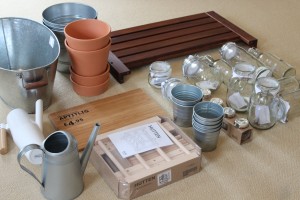
- A selection of KORKEN glass canning jars and bottles. These come in no packaging, are made in Germany and there is no plastic. Hooray! I have genuinely been in need of some of these jars for a while.
- SOCKER galvanised metal plant pots in different sizes in which I hope to grow herbs, plants and some food. I also chose the SOCKER watering can as it looked durable enough to leave outside and collect rain water for the plants.
- GRÄSLÖK galvanised metal plant pot, similar to the SOCKER range, but has wooden handles. I was really excited about this item as it’s pretty deep and should allow me to try planting items such as garlic and roots vegetables although I can’t help thinking how nice a load of organic lavender would look in there too! This item wasn’t actually part of the pre-selected range by Ikea but I made a pitch that was going to use it for the project and not just use it as an ornamental piece.
- INGEFÄRA terracotta plant pots for more planting and growing
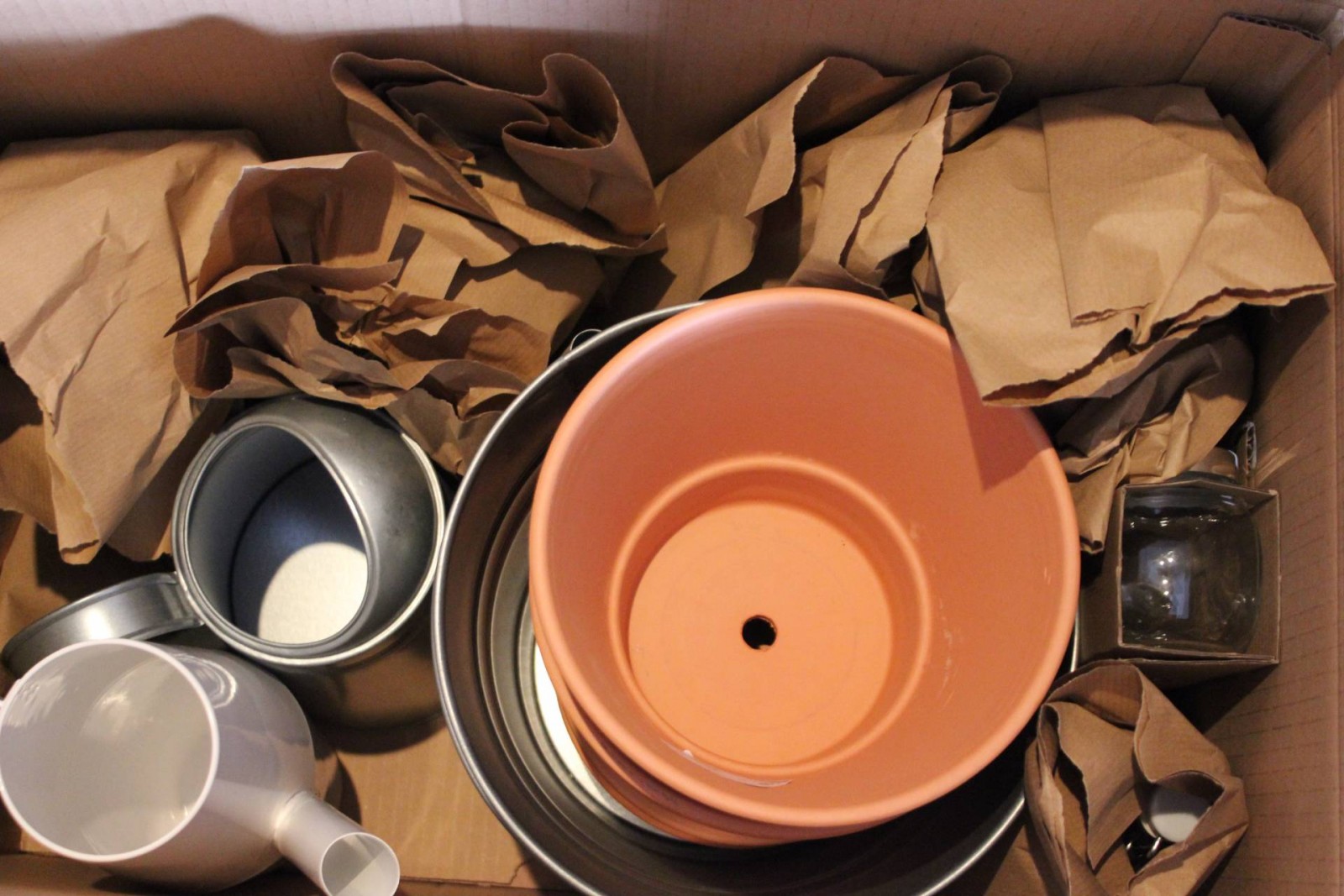
- ÄPPLARÖ outside bench to organise the various plant pots on our balcony. Peter from Ikea had kindly removed the outer plastic packaging before sending it to me so that it just arrived in a cardboard box (hooray!) it still contained some thin layers of plastic inside. I’m gonna see if I can return these to the store for them to deal with.
- BITTERGURKA metal and bamboo watering can for indoor plants.
- RAJTAN glass spice jars. I now think I didn’t really need these and they have some plastic in the lid. I may have gotten a little carried away in store, but will hopefully find a use for them – maybe to store some of my home grown herbs once dried! I said dried, not died, ok?!
- HUTTEN wine rack – I don’t drink alcohol, and my husband rarely does, but I figured this could be useful for storing some of the wine we buy for cooking with. I feel I may have gotten carried away AGAIN and this isn’t really a necessary item but we shall see. I figure I could display empty canning jars and bottles on it when not in use. It comes wrapped in plastic, which I’ll return to the store.
- APTITLIG bamboo chopping board – I REALLY needed a large chopping board. I didn’t quite realise this until I chopped on it for the first time yesterday… Is it wrong to enjoy using a large slab of bamboo so much? I chose an ex-display one as all the others were wrapped in single use plastic. Oddly, another variety of chopping board which was made from a different wood was not wrapped in anything. Would love to see them quit wrapping items in plastic, especially when similar ones that are on the same shelf aren’t.

And that’s my lot! The grand total? £140.45.
I would like to give a mention to Peter at Ikea who was incredibly patient and understanding of me wanting to try to avoid plastics and packaging as much as possible and who even used recyclable brown paper tape instead of cellotape to parcel up my items for delivery. Thank you.

I am also genuinely excited to see Ikea taking steps in the sustainability direction. By their own admission, they are not perfect (PLASTIC PACKAGING!) and they may make a few mistakes along the way but they ARE taking responsibility which is something I would love to see many other companies do.
And let’s face it. If a company the size of Ikea can prove that applying sustainability values to their business can be profitable, kind to the planet and actually achievable, then hopefully others will follow.
Watch this space and my YouTube channel to see how I get on throughout this project. Any suggestions on growing your own herbs and veggies (for beginners, might I add), are most welcome…. nay, encouraged! Wish me luck!
Read more about Ikea’s People & Planet sustainability projects here


Awesome post! Very inspiring!
You could try using the wine rack to make your own sprouted grains. It’s super simple just requires a little bit of time each day or so. Plus you already have the medium and large canning jars. There are many of YouTube videos on this.